
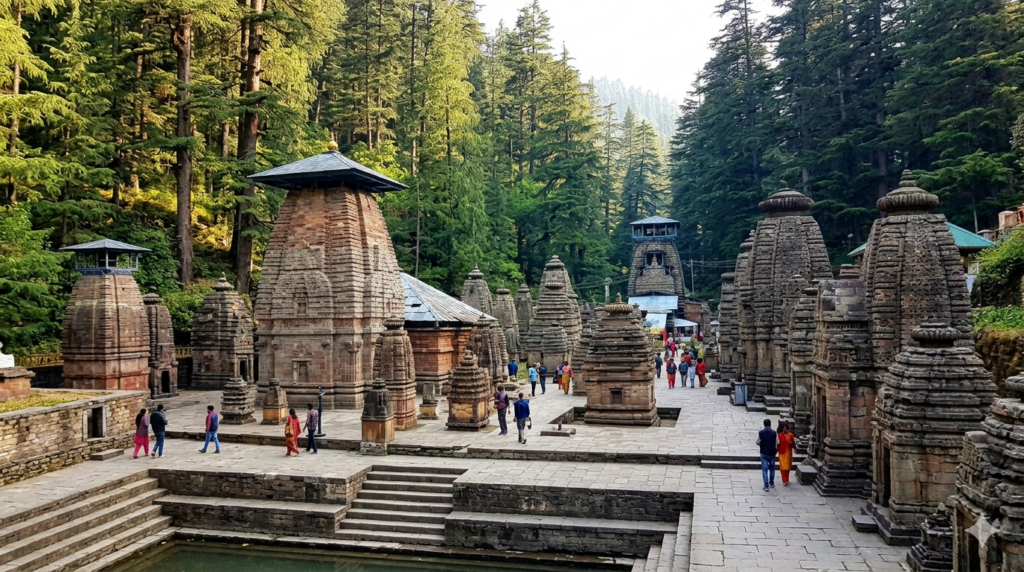
Situated in the Almora district of Uttarakhand, Jageshwar Dham stands as one of India’s most significant spiritual and archaeological sites. Its renown stems from a unique blend of ancient history, mythological significance, and its magnificent setting amidst dense cedar forests.
Here is why Jageshwar Dham is so famous:
1. One of India’s Largest Temple Clusters
Jageshwar is home to a cluster of over 124 ancient stone temples, dating back to between the 7th and 12th centuries. These were primarily constructed by the Katyuri and Chand dynasties. It is a rare sight to behold such a large number of beautifully preserved stone temples concentrated in a single location.
2. Religious Significance (The 8th Jyotirlinga)
According to various traditions and the *Shiva Purana*, Jageshwar is believed to be the abode of the Nagesh Jyotirlinga (the 8th among the 12 Jyotirlingas). Even for those who identify that specific Jyotirlinga with a different location, Jageshwar is universally revered as the “Abode of Lord Shiva” and a pivotal center of Shaivism.
Mahamrityunjaya Temple: This is the oldest and most significant temple within the complex. It is renowned for the Mahamrityunjaya Mantra, which is believed to grant victory over death.
Lakulisha Shaivism: This site served as a major center for the Lakulisha sect, an ancient form of Shiva worship.
3. Architectural Excellence
These temples showcase the *Nagara* style of architecture, characterized by tall, curvilinear spires (*Shikharas*). The intricate stone carvings—along with the absence of mortar (masala) in their construction (relying instead on gravity and the precise interlocking of stones)—reflect the advanced craftsmanship of the post-Gupta era.
4. Association with Adi Shankaracharya
According to legend, the great philosopher Adi Shankaracharya visited Jageshwar in the 8th century. The credit for re-establishing the sanctity of this site and prescribing the appropriate rituals for worship—which are followed to this day—goes to him.
This “Dham” is nestled within a narrow valley, enveloped by centuries-old, towering Deodar trees and the murmuring waters of the Jata Ganga stream. This secluded, natural setting creates a powerful, meditative atmosphere that draws thousands of seekers and tourists in search of peace.